

Tuberculosis Diagnosis
Tuberculosis (TB) is classified as one of the major infectious diseases in China and a serious respiratory disease threatening public health. According to the WHO Global Tuberculosis Report 2023, there were 10.6 million new TB cases worldwide in 2022, with an incidence rate of 133 per 100,000 population. In China, an estimated 748,000 new TB cases occurred in 2022, with an incidence rate of 52 per 100,000. China ranks third in estimated TB incidence among the 30 high-burden countries.
In 2014, the World Health Organization (WHO) set the goal of ending the TB epidemic by 2035, aiming to reduce TB mortality by 95% and incidence by 90% (to below 10 per 100,000). However, recent statistics show that this goal remains challenging. New tools, methods, and strategies are urgently needed to accelerate progress toward ending TB.

The article Transforming tuberculosis diagnosis published in Nature Microbiology in May 2023, along with recent Chinese policy documents on TB control, provides new insights into future TB diagnostic strategies.
01. Shift from Smear Microscopy to Molecular Detection
Smear microscopy is simple, rapid, and low-cost, and has long been widely used in TB testing. In China, the clinical workflow commonly uses “three smears, two cultures, one molecular test,” and over 90% of TB patients undergo smear testing. However, smear has limitations: only a small sample is used, with no bacterial enrichment, leading to sensitivity below 30%. It also cannot determine drug resistance.
Molecular detection amplifies target sequences, enabling detection of low bacterial loads with higher sensitivity and specificity. It can also identify resistance genes to determine drug‑resistant profiles. As efforts to end TB advance, low-burden and asymptomatic patients will become key screening targets, increasing demand for highly sensitive detection technologies.

02. Shift from Provincial/Municipal Specialized Hospitals to Primary Care Testing
China has a large territory and population. To rationally allocate medical resources and promote equal access to basic health services, the country has long promoted a tiered diagnosis and treatment system. Although provincial and municipal designated TB hospitals have comprehensive testing systems, their limited coverage cannot reach all regions. Therefore, building primary testing capacity has gained increasing attention.
The National Bureau of Disease Control and Prevention, in its Notice on Further Strengthening the Prevention and Treatment of Drug-Resistant Tuberculosis, identifies strengthening TB laboratory capacity at all levels and equipping county/district designated facilities with molecular drug-resistance testing equipment as priorities. Integrated devices offering both identification and resistance testing — with simple operation, good containment, and compact size — are especially suitable for primary care capacity building.
03. Shift from Passive Detection to Active Screening
Early TB patients may be asymptomatic or have mild, non-specific symptoms and often do not seek medical care voluntarily. This delay can worsen the disease, increase infectivity, and spread infection to others. Thus, “active screening and moving the barrier forward” is essential to end the TB epidemic.
Numerous national guidelines — including the China Tuberculosis Prevention and Control Guidelines, Action Plan for Controlling Drug Resistance, 13th Five-Year Plan for National TB Prevention and Control, and Guidelines for Active Community Screening of Pulmonary Tuberculosis in China — all emphasize active screening in key settings and populations. In 2020, the National Health Commission issued the China School Tuberculosis Prevention and Control Guidelines for student populations. Successful pilot projects such as “TB-Free Communities” in Shanghai demonstrate that active screening will become a powerful tool to reduce TB incidence. These screened populations often have mild symptoms and low bacterial loads, requiring highly sensitive and affordable domestic equipment.
04. Shift from Sputum to Multiple Sample Types
Sputum is the main sample for TB testing due to easy collection. However, patients with high clinical suspicion but negative sputum often require bronchoalveolar lavage fluid. For children, stool and gastric fluid samples perform better. Additionally, tongue swabs for non‑sputum patients are a current research hotspot in TB molecular testing.
Combining multiple sample types improves detection rates, especially in special populations, and provides more accurate evidence for treatment. Future TB diagnostic technologies must therefore offer stronger compatibility and stability.

Rocgene
iFIND Fully Automatic Molecular Detection Platform
TB Identification and Rifampicin Resistance Detection System
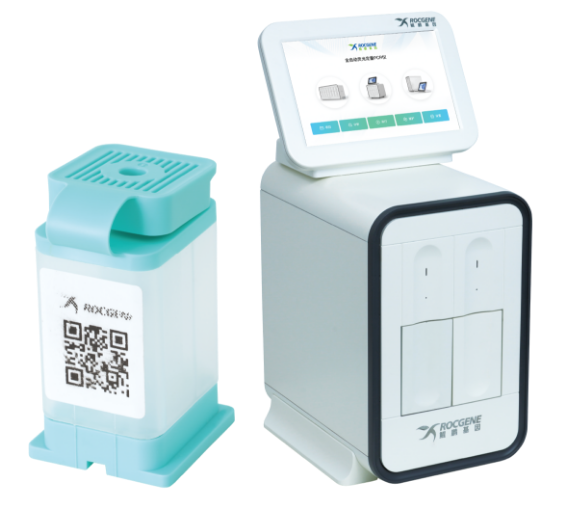
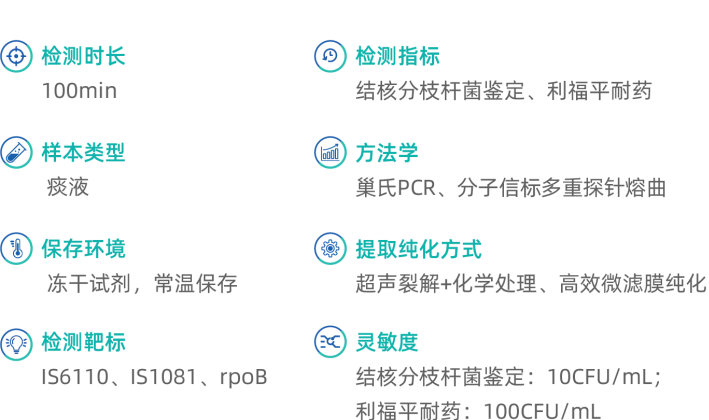
Rocgene’s Mycobacterium tuberculosis Identification and Rifampicin Resistance Gene Detection Kit on the iFIND platform is the only domestic product using dual-target detection of IS6110 and IS1081. Combined with efficient ultrasonic extraction and nested amplification, it greatly improves sensitivity, achieving an identification sensitivity of 10 CFU/mL — perfectly meeting the future demand for high-sensitivity TB detection.
Its integrated design supports primary care deployment, ensuring accuracy while reducing infection risk for operators. The iFIND platform uses ultrasonic extraction and high-efficiency microfiltration purification to remove most impurities and inhibitors. Its robust amplification system enables excellent performance even in complex samples.
06
16
08
18


 +86-010-86229225
 info@rocgene.com
 CN
CN