

Monkeypox Implemented as "Category B Infectious Disease with Category B Prevention and Control Measures" Starting September 20
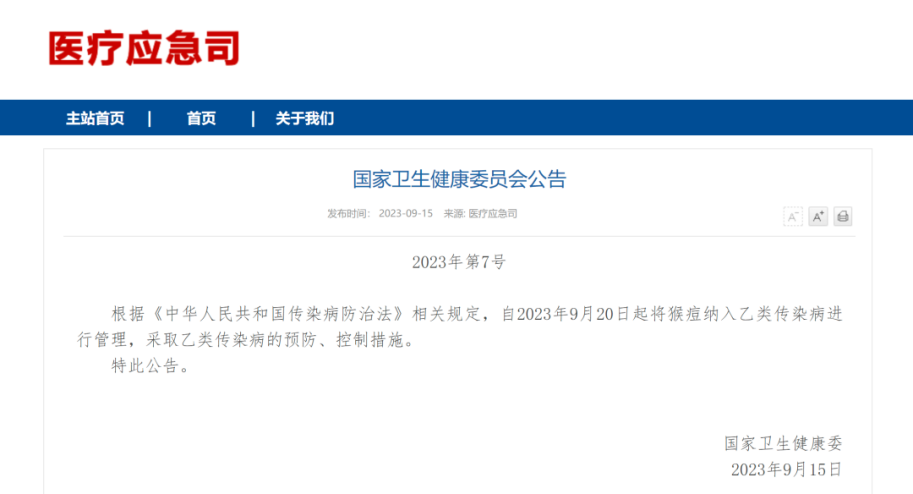
According to the official announcement of the National Health Commission (NHC), in accordance with the provisions of the Law of the People's Republic of China on the Prevention and Treatment of Infectious Diseases, monkeypox has been included in the management of Category B infectious diseases since September 20, 2023, with prevention and control measures for Category B infectious diseases implemented.
Domestic Cases Exceed 1,000
Monkeypox Epidemic to Persist in China for a Certain Period
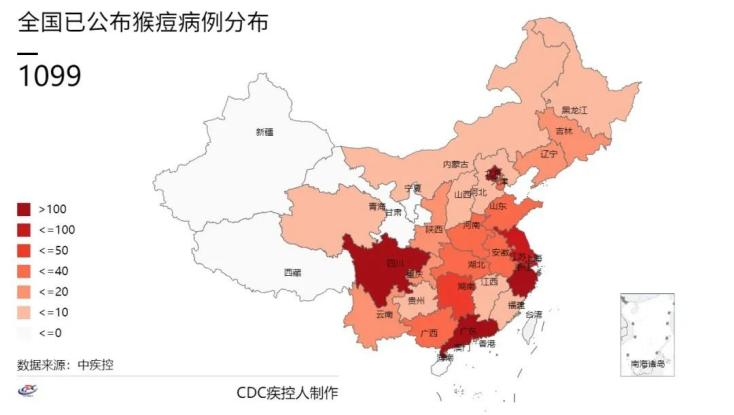
Data released by the Chinese Center for Disease Control and Prevention (China CDC) shows that 106, 491 and 501 confirmed monkeypox cases were newly reported in June, July and August respectively, with the cumulative number of domestic monkeypox cases exceeding 1,000 within three months.
Epidemic Characteristics at the Current Stage
Ø The vast majority of cases are among Men who have sex with men (MSM, referring to men who have sexual contact with the same sex)
Ø Female cases have been reported, with high possibility of infection through heterosexual sexual contact
Ø Low risk to the general population and low risk of transmission through other contact methods
Ø Mainly detected through active medical treatment and traceability screening of close contacts
Ø Some monkeypox patients have atypical clinical manifestations
Latest Policy Guidelines
"Technical Plan for Monkeypox Prevention and Control"
Issued by the National Health Commission and the National Administration of Disease Prevention and Control on July 26, 2023 (Guo Ji Kang Chuan Fa [2023] No. 16).
"Expert Consensus on Hospital Infection Prevention and Control of Monkeypox"
Initiated by the National Healthcare Institution Infection Surveillance Network, the National Training Base for Hospital Infection Monitoring and Management, and the National Clinical Research Center for Geriatric Diseases, it was published in the Chinese Medical Journal, Volume 103, Issue 34, September 2023.
High-Risk Groups
MSM: The MSM population, which is the main group affected by the monkeypox outbreak in many countries around the world, spreads the virus through sexual contact, large-scale gatherings, and subsequent transmission among MSM in the community, spreading to multiple countries and regions globally.
Healthcare Workers: Survey results show that 70% of medical staff did not take appropriate personal protective measures when contacting human monkeypox cases for the first time.
Multi-Channel Surveillance
1. Medical Institution Surveillance
Medical institutions at all levels shall conduct surveillance for monkeypox-like symptoms, especially dermatology (venereology) departments, anorectal departments, and voluntary counseling and testing clinics for AIDS, which shall focus on individuals with monkeypox-like symptoms.
2. Key Population Surveillance
Medical institutions and CDC institutions at all levels shall actively inquire about monkeypox-like symptoms and suspicious exposure history when providing diagnosis, treatment or testing consultation services to key populations such as MSM.
3. Entry Personnel Surveillance
Customs shall collect specimens and conduct nucleic acid testing in a timely manner for entry personnel who declare abnormal health conditions related to monkeypox or are found to have monkeypox-like symptoms during quarantine.
4. Sewage Surveillance in Key Venues
Based on the epidemic situation, sewage surveillance shall be carried out in key venues frequently visited by MSM, such as bars, clubs and bathhouses.
WHO-Recommended Nucleic Acid Detection Methods
WHO regards real-time PCR and/or sequencing as the confirmatory methods for monkeypox virus, and recommends the priority use of monkeypox virus-specific real-time PCR or orthopoxvirus universal detection methods for testing suspected samples.
For monkeypox virus nucleic acid testing, specimens from skin or mucosal lesion sites are preferred, and oropharyngeal swab specimens can be collected simultaneously.
Rocgene Monkeypox Nucleic Acid Detection
Comprehensive Solution
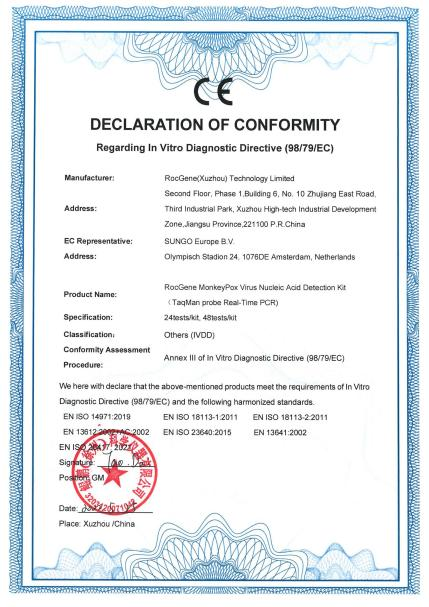
The Monkeypox Virus Nucleic Acid Detection Kit (Fluorescent PCR Method) independently developed by Rocgene has obtained CE certification. It detects the gene fragments of monkeypox virus through specific fluorescent probes, and adds endogenous internal control to avoid false negative results. Featuring high sensitivity, strong specificity, anti-interference, high accuracy and simple operation, it can qualitatively detect monkeypox virus DNA in samples such as vesicle fluid, swabs from lesion rash/vesicle surface/exudate, and serum in vitro, quickly and accurately identify monkeypox virus, and help with the precise diagnosis and epidemic prevention and control of monkeypox.
High Sensitivity: Adopting PCR fluorescent probe method with excellent performance, LoD reaches 400 copies/mL;
Strong Specificity: Can effectively distinguish other pathogens causing febrile rash: other orthopoxviruses, varicella-zoster virus, herpes simplex virus, measles virus, dengue virus, etc.;
Strong Anti-Interference: Not affected by conventional blood interfering substances and antiviral drugs;
High Accuracy: Unique internal control design helps eliminate false positives and false negatives;
Simple Operation: Only one premix contains primers and probes, which can be used for virus nucleic acid detection in one step.
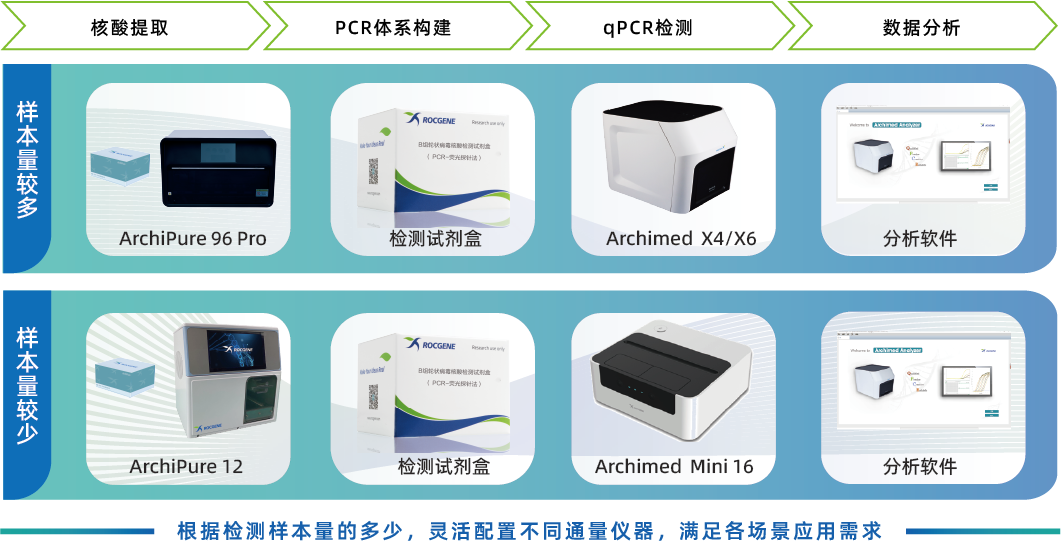
Multi-Scenario, Multi-Platform
Meeting the Testing Needs of Different Samples
06
16
08
18


 +86-010-86229225
 info@rocgene.com
 CN
CN