


Host Residual DNA Detection Kits Newly Launched, Apply for Trial Now
Biopharmaceutical products such as recombinant proteins, antibodies, vaccines and gene therapy products usually use host cells as vectors during production, e.g., CHO, E.coli, Vero cells, etc. Since DNA released from lysed host cells carries potential risks of tumorigenicity, mutagenicity and immunogenicity, regulatory authorities including WHO, FDA, EMA and NMPA have imposed strict limits on residual host cell DNA in final biological products. The clearance of host DNA during manufacturing is a key regulatory focus.
Standards for Residual Host DNA
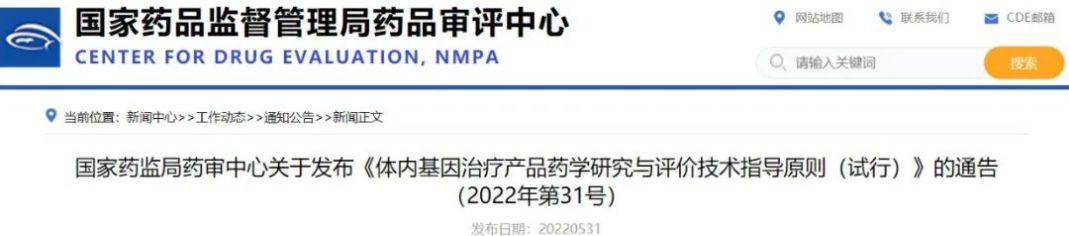
In May 2022, the Center for Drug Evaluation of NMPA issued the "Guidelines for Pharmaceutical Research and Evaluation of In Vivo Gene Therapy Products (For Trial Implementation)", which for the first time clearly specifies that the size of risky residual DNA fragments should be controlled below 200 bp. "If tumor cell lines (such as Hela cells), tumorigenic cell lines, or cells carrying oncogenes or virus-derived sequences (such as HEK 293T cells) are used in production, while ensuring no residual intact viable cells, the residual amount and fragment size of DNA shall be controlled with appropriate limits. Where possible, residual DNA is recommended to be controlled within 10 ng per dose, and residual DNA fragment size below 200 bp."
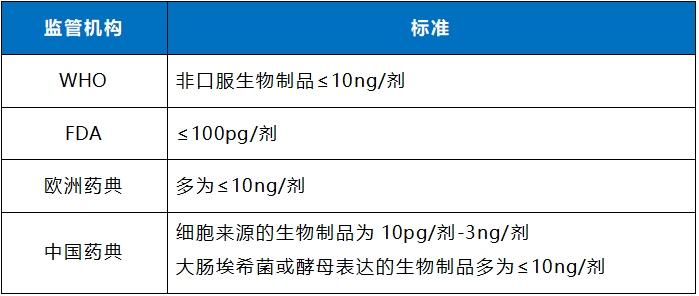
According to Volume III of the 2020 edition of Chinese Pharmacopoeia, residual DNA in biological products produced from cell substrates shall not exceed 100 pg per dose, and residual DNA in vaccines produced from bacterial or fungal substrates shall not exceed 10 ng per dose.
Residual DNA Detection Methods
Three methods for residual host DNA detection are included in General Chapter 3407 of Volume III, Chinese Pharmacopoeia 2020 edition: DNA probe hybridization, fluorescent staining, and qPCR. Among them, DNA probe hybridization is unstable and time-consuming; fluorescent staining has poor specificity. Due to high sensitivity, sequence specificity and accuracy, qPCR has become the preferred detection method for manufacturers.

Rocgene Biopharmaceutical Comprehensive Solution
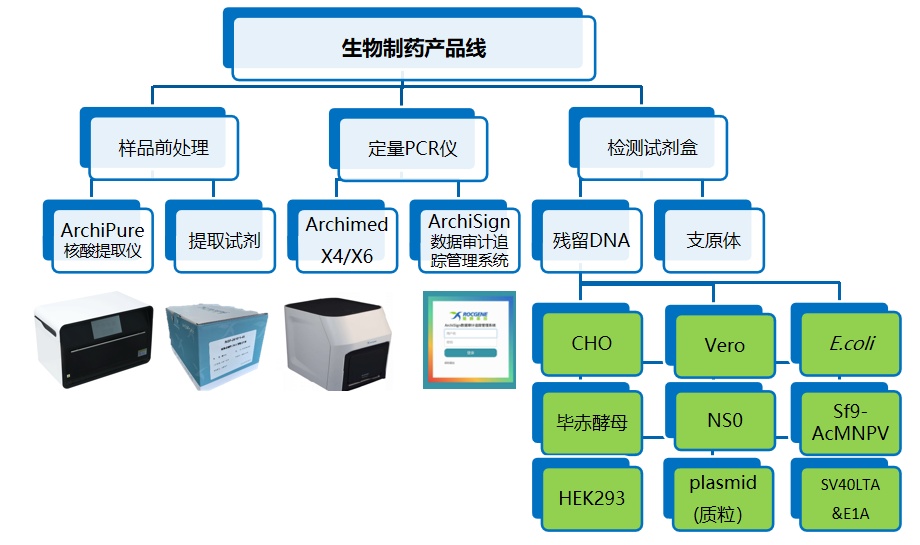
Rocgene has developed a series of residual DNA detection kits covering four host cells: CHO, E.coli, Vero and Pichia pastoris. These products have been widely praised by customers since launch more than one year ago. To further meet customer demands and expand the product line, Rocgene has continued to develop residual DNA detection kits for NS0, Sf9&AcMNPV, HEK293, Plasmid, SV40&E1A. These kits are compatible with Rocgene Archimed X series qPCR systems as well as many other instruments such as 7500, StepOne Plus and CFX96. Supporting host residual DNA extraction kits and automated nucleic acid extractors are also available. Rocgene biopharmaceutical residual detection solution covers the entire product line: sample pre-treatment, qPCR instruments and detection kits, making residual DNA testing simple and efficient.
Product Features
1. Accurate: Standards traceable to national reference materials, CV<5%
2. Sensitive: Stable detection at femtogram (fg) level host DNA
3. Fast: Assay completed in 60 minutes
4. Anti-contamination: dUTP+UNG enzyme system prevents aerosol contamination
5. Convenient: Fully premixed system, ready-to-use
6. Cost-effective: Equivalent or better performance at more affordable price
Performance
1. Accuracy
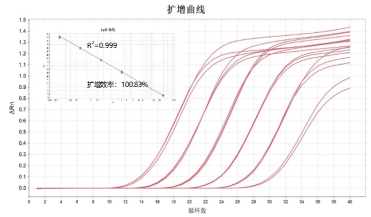
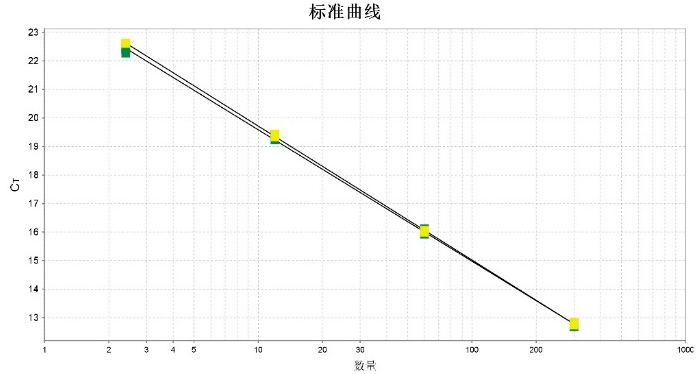
Parallel comparison between Rocgene kit standards and national reference materials shows a difference of <5% at 3 pg/μL and 300 pg/μL.

2. Specificity
100 ng human DNA spiked into different concentrations of CHO-derived DNA showed consistent results, demonstrating strong specificity without interference from other DNA sources.
3. Recovery
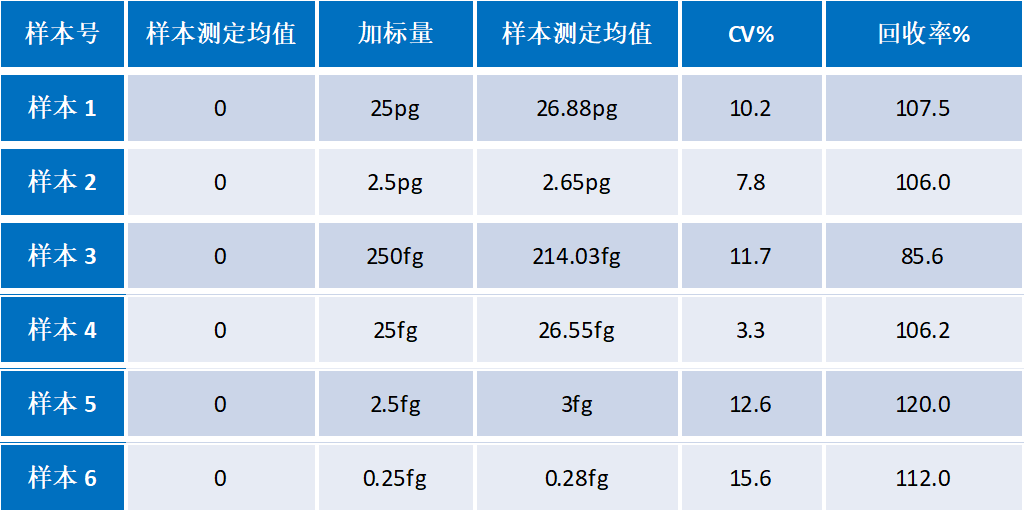
Using CHO residual DNA detection kit, sample recovery ranges from 85% to 120% at spike levels of 0.25 fg–25 pg, exceeding the pharmacopoeia standard (50%–150%).
4. Robustness
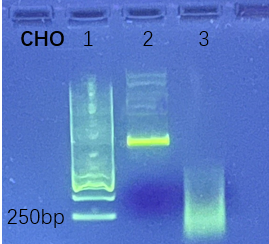
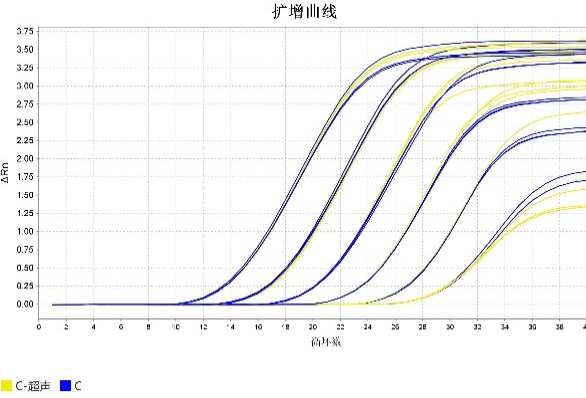
CHO-derived genomic DNA was fragmented by sonication. Identical detection results for intact and fragmented DNA prove the kit is suitable for samples at different process stages.
5. Multi-instrument Compatibility
Parallel tests on Rocgene Archimed X4 and ABI 7500 show consistent results.
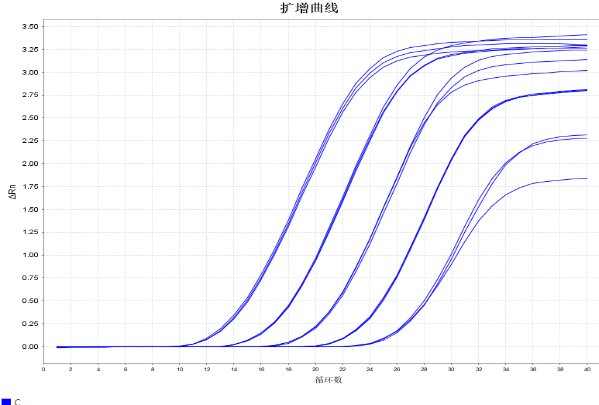
Rocgene X4
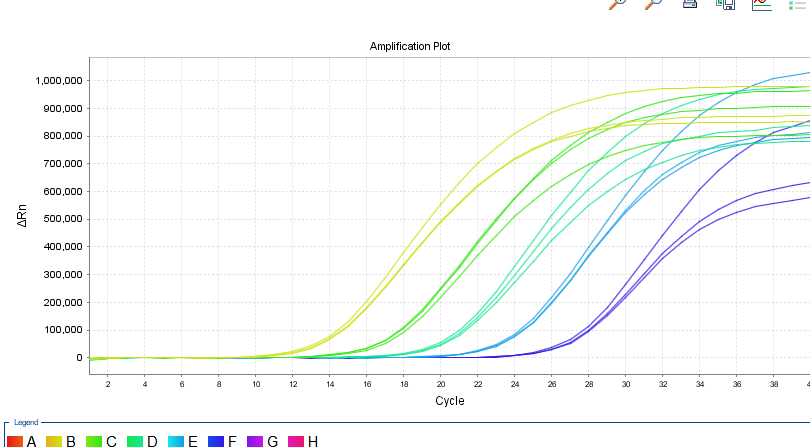
7500
Scan to get trial kits

06
16
08
18


 +86-010-86229225
 info@rocgene.com
 CN
CN