

Product Background
In the manufacturing of cell therapy products, plasmid/Minicircle DNA is one of the main components of DNA vaccine products, and also an important raw material for viral vector or non-viral vector cellular immunotherapy. In the production of plasmid-producing strains, Escherichia coli is mostly used for fermentation. DNA products can be purified through alkaline lysis. However, during alkaline lysis, a large amount of RNA is released from E. coli and randomly fragmented into RNA fragments of various sizes.
RNA fragments in biological products can affect their biological activity and interfere with the transfection and expression efficiency of plasmids. Meanwhile, residual RNA may activate the cellular interferon pathway and trigger immune responses, which are harmful to humans. Therefore, it is necessary to establish a quantitative detection method for residual RNA to ensure product quality and safety.
Regulatory Requirements
The General Chapter for Human Gene Therapy Products in Volume III of the Chinese Pharmacopoeia 2020 Edition stipulates that detection indicators for physical and biological quantity of gene therapy products should be established. The content can be determined by detection of total particle count, infectious titer or infectious particle count, genomic DNA/RNA or plasmid DNA concentration, etc.
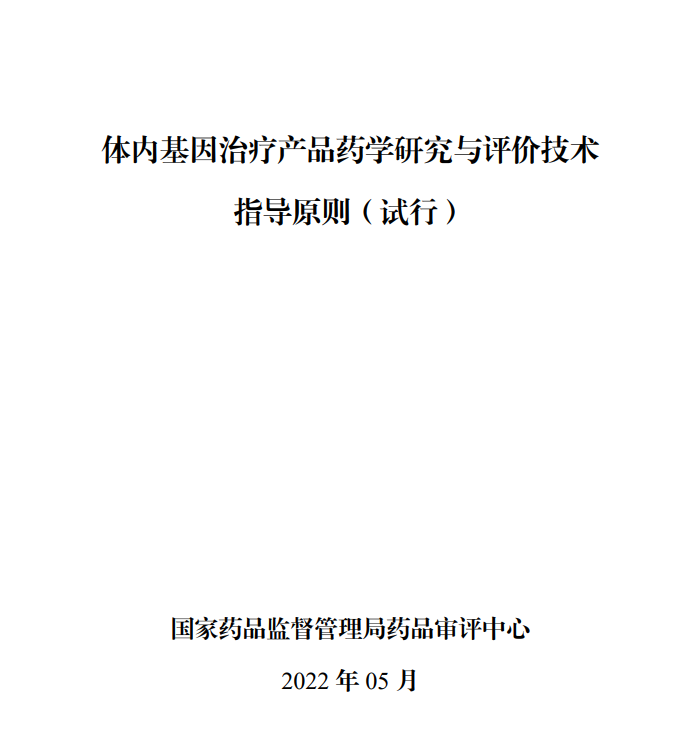
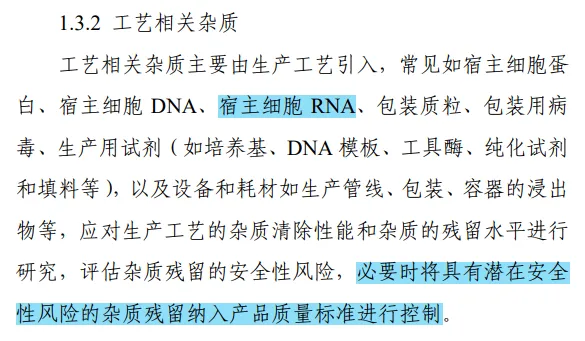
In May 2022, the Center for Drug Evaluation (CDE) of the National Medical Products Administration issued the Guidelines for Pharmacology Research and Evaluation of In Vivo Gene Therapy Products (for Trial Implementation), which clearly states that process-related impurities introduced by the production process, such as host cell RNA, should be included in the product quality standards for control.
Detection Method
The Chinese Pharmacopoeia 2020 Edition currently specifies three residual nucleic acid detection techniques: DNA probe hybridization, fluorescent staining, and quantitative PCR. Among them, quantitative PCR uses fluorescently labeled specific probes to monitor changes in fluorescence values in the reaction system, which reflect the changes in the amount of specific amplification products in real time. When the fluorescence intensity reaches the threshold, the PCR cycle number is linearly related to the logarithm of the initial template amount. Using a known concentration of DNA standard to construct a standard curve, the residual amount of exogenous DNA can be determined with high sensitivity and specificity.
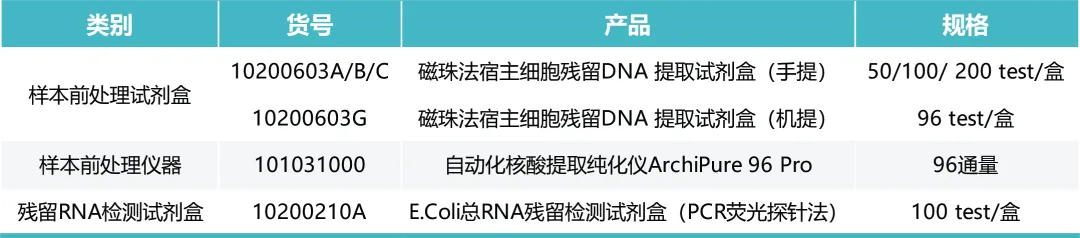
The E. coli Total RNA Residue Detection Kit (PCR Fluorescent Probe Method), independently developed by Rocgene, is equipped with E. coli RNA quantitative reference materials. It can quickly and accurately quantify residual E. coli host cell RNA in intermediates, semi-finished products and finished products of various biological products.
Product Features

Performance Indicators
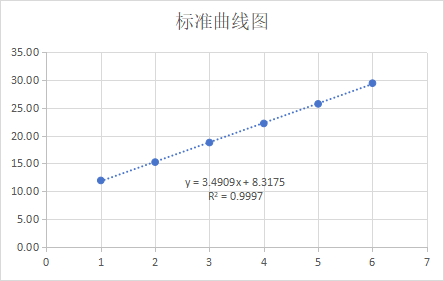
1 – Linearity of Standard
The linear range of the kit is: 2.00×10⁻³ pg/μL ~ 2.00×10² pg/μL, R²=0.9997, amplification efficiency 93.40%, CV of each concentration <15%.
2 – Limit of Blank (LoB)
The mean value of LoB is 7.34×10⁻⁵ pg/μL, and the LoB is determined to be ≤ 5.48×10⁻⁴ pg/μL.

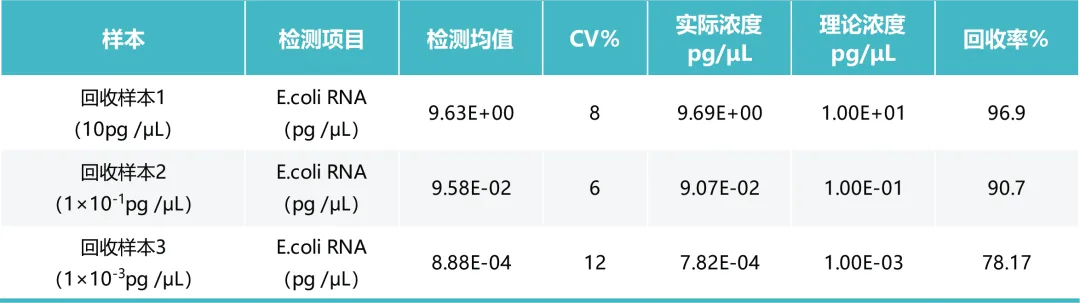
3 – Accuracy
100 μL samples at concentrations of 1×10⁻³ pg/μL, 1×10⁻¹ pg/μL, and 10 pg/μL were taken for 3 tests respectively, and the recovery rate and CV were analyzed. The recovery rates of DNA samples at different concentrations were all between 70% and 130%, and CVs were all <15%.
4 – Repeatability
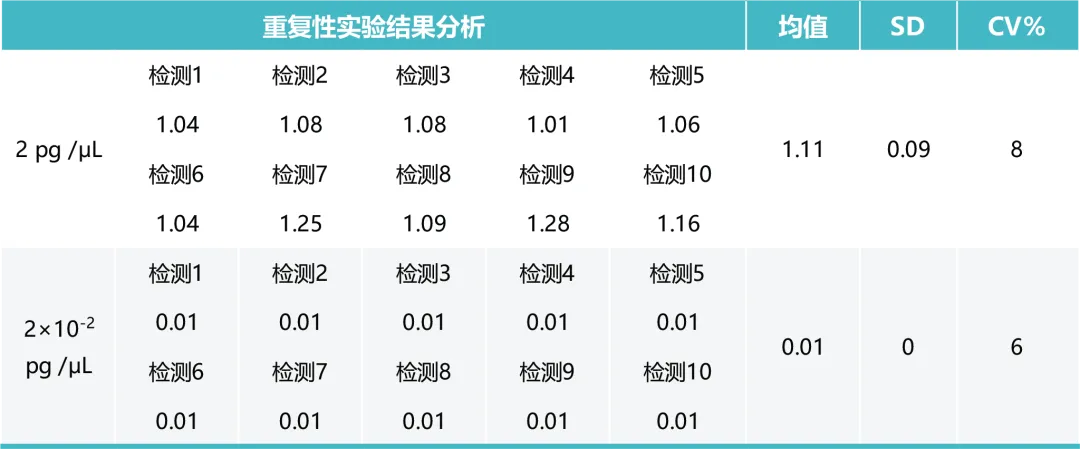
2 pg/μL and 2×10⁻² pg/μL E. coli RNA were tested 10 times repeatedly, with CV <15%.
5 – Limit of Quantitation (LoQ)
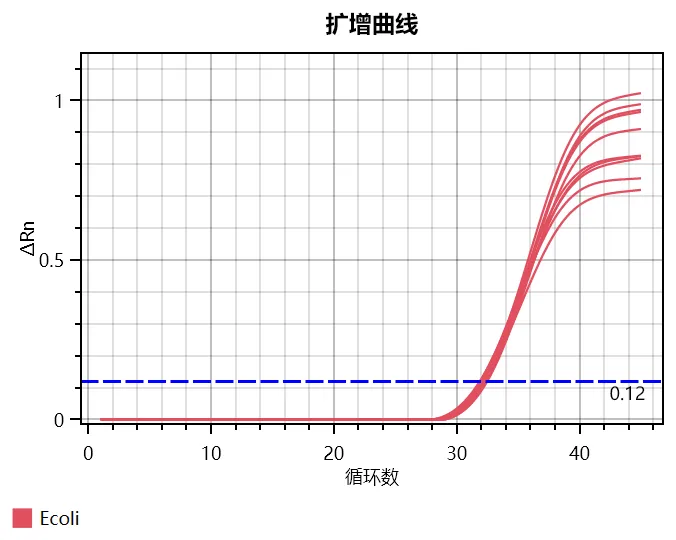
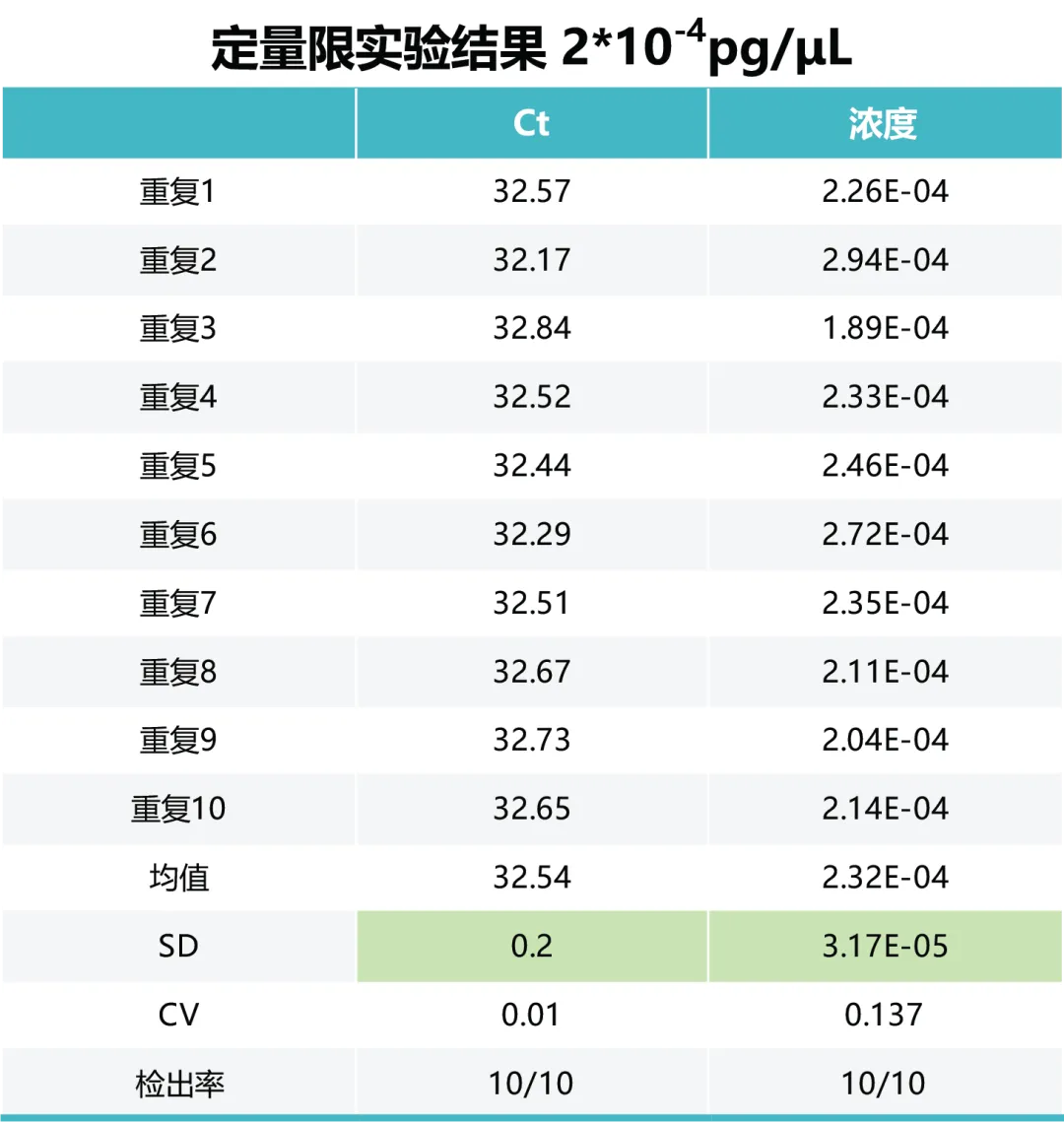
E. coli RNA at 5×10⁻³ pg/μL, 2×10⁻³ pg/μL, 1×10⁻³ pg/μL, 2×10⁻⁴ pg/μL were tested. For concentrations of 2×10⁻³ pg/μL and above, CV of 10 replicate wells <20%. In summary, the LoQ of the E. coli Total RNA Residue Detection Kit can reach 2×10⁻⁴ pg/μL.
Product Information
06
16
08
18


 +86-010-86229225
 info@rocgene.com
 CN
CN