

01 Importance and Significance of Blood Sample Testing
Blood is the only tissue that comes into contact with all organs and carries a wealth of valuable information about the body. Theoretically, detecting DNA, RNA, vesicles, and cellular debris in blood can help diagnose and monitor various diseases.
Detecting gene expression, genetic variations, and other information in blood samples provides more precise data support for diagnosis and treatment. Genetic testing technology has been applied in multiple fields, such as cancer screening, detection and prediction of hereditary diseases, personalized medication, and tumor microtranscriptome analysis. Advances in genetic testing technology have enabled more comprehensive and accurate blood testing, helping to identify the risk of certain diseases early and take timely preventive and therapeutic measures.
02 Clinical Applications of Blood Genetic Testing
1. Non-Invasive Prenatal Genetic Testing
Birth defects in newborns not only impose a heavy burden on families but also have become a critical issue seriously affecting China's economic development and population quality. Some specific hereditary diseases only show obvious symptoms a certain period after birth. Therefore, early genetic screening of newborns can facilitate medical intervention as soon as possible, achieving the effect of early detection and early treatment. Currently, genetic testing technology is mainly applied in reproductive health in the following aspects: Preimplantation Genetic Diagnosis (PGD), Non-Invasive Prenatal Testing (NIPT), and detection of monogenic genetic diseases in newborns.
2. Tumor Genetic Testing
Gene sequencing technology has two main applications in personalized tumor treatment: first, detecting tumor-related genes carried by patients, and second, identifying targets for tumor-targeted drugs.
3. Blood Source Screening
Studies have shown that nucleic acid testing reagents can shorten the average "window period" for detecting hepatitis B, hepatitis C, and HIV viruses from the original 56 days, 70 days, and 22 days to about 31 days, 11 days, and 11 days, respectively. The combined application of nucleic acid testing and enzyme-linked immunosorbent assay (ELISA) can further improve virus detection rate and reduce the rate of missed diagnosis or misdiagnosis of relevant infectious virus infections.
03 Key Considerations for Extraction of Different Types of Blood Samples
1. Anticoagulated whole blood such as EDTA-, citrate-, or ACD-anticoagulated blood is usually used; heparin anticoagulation is not recommended as heparin inhibits PCR amplification. RNA extraction is recommended to be performed as soon as possible. For DNA extraction: anticoagulated whole blood can be stored at 2-8℃ for about one week, at -20℃ for about three months, and long-term storage at -80℃ is feasible, but the yield and integrity of DNA will be affected with prolonged storage time.
2. Serum and plasma samples should be separated from whole blood as soon as possible. Separated serum and plasma can be stored at -20℃ for short-term use and at -70℃ for long-term storage up to one year.
3. For frozen whole blood, repeated cell lysis steps are required to ensure complete lysis of red blood cells, but this will reduce the amount of purified DNA obtained.
4. Blood clot samples can be stored in a -20℃ refrigerator for 1 month, and samples requiring longer storage should be kept in a -70℃ refrigerator. Repeated freeze-thaw cycles should be avoided during storage. Before extraction, blood should be rapidly thawed at 37℃ and gently inverted to mix well.
5. After red blood cell lysis, red blood cell debris must be removed as much as possible, which can be achieved by washing the white blood cell pellet multiple times. Excessive residual red blood cell debris will affect subsequent operations such as PCR.
6. After adding nuclear lysis buffer to the white blood cell pellet, gentle pipetting several times during incubation helps lyse white blood cells and significantly improve DNA yield.
04 Selection of Extraction Reagents
When selecting nucleic acid extraction kits, the first consideration is the sample type and the type of nucleic acid to be extracted, and kits with high extraction efficiency should be selected targetedly. If cell-free nucleic acid or tumor cfDNA is to be extracted from plasma or serum, or if there is bacterial or viral infection in peripheral blood, plasma or serum extraction reagents are generally chosen. If the target nucleic acid abundance is low and a large amount of plasma or serum is required for enrichment and extraction, large-volume plasma or serum nucleic acid extraction and purification reagents should be selected.
If pathogen nucleic acid is the extraction target, using serum or plasma as experimental samples not only eliminates impurities such as blood cells but also helps improve nucleic acid purity and increase the sensitivity and stability of detection reactions. Therefore, using serum as the experimental sample can further improve sample purity and increase the concentration of cell-free nucleic acid to obtain more sensitive detection results.
As a total solution provider for genetic testing, Rocgene has independently developed a variety of nucleic acid extraction and detection products in the field of molecular diagnostics — ArchiPure series extraction products and Archimed series detection equipment.
ROCGENE
Rocgene
Total Solution for Pathogen Detection
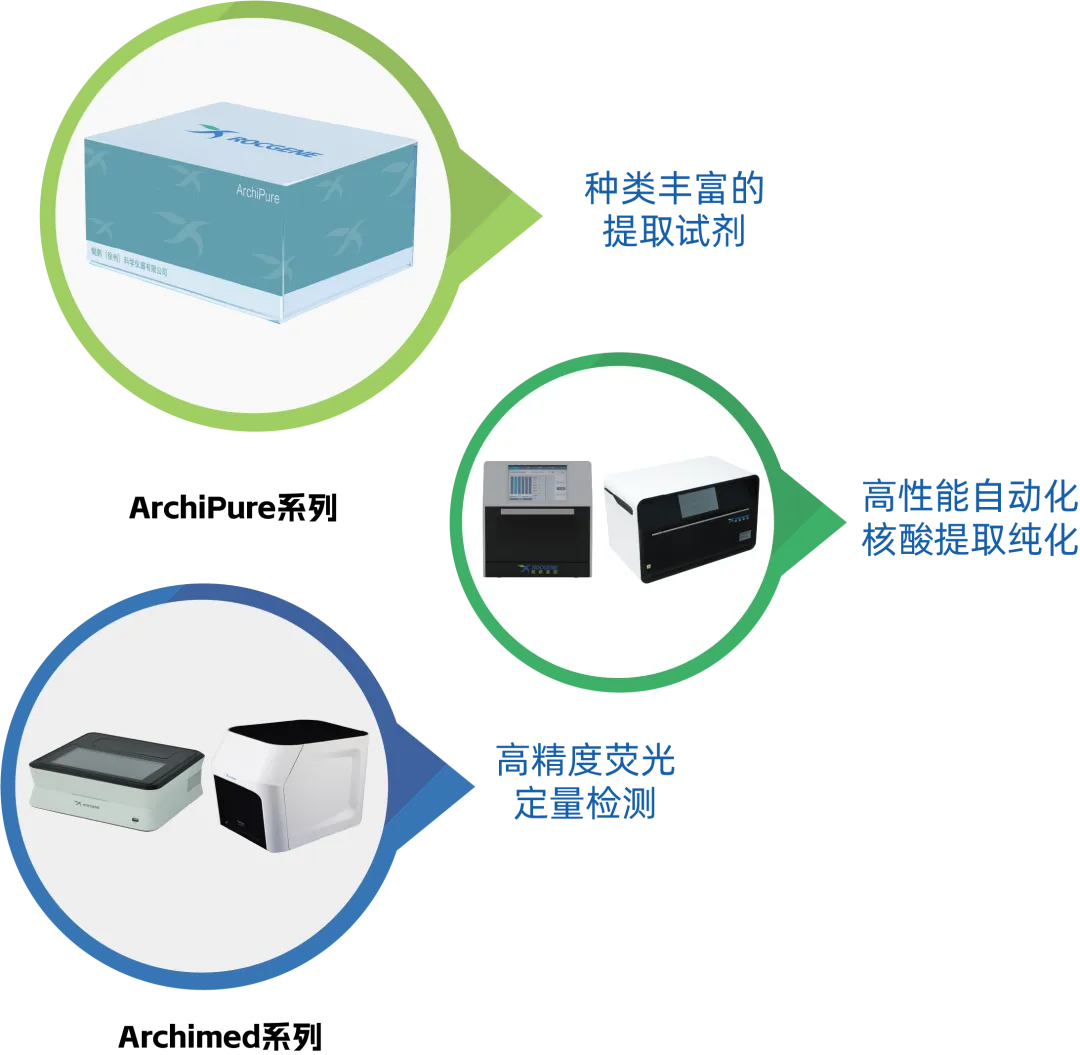
The ArchiPure series covers a variety of sample processing and extraction reagents and purification equipment with different throughputs. The obtained blood samples have high concentration and good purity, which can meet different requirements of downstream experiments.
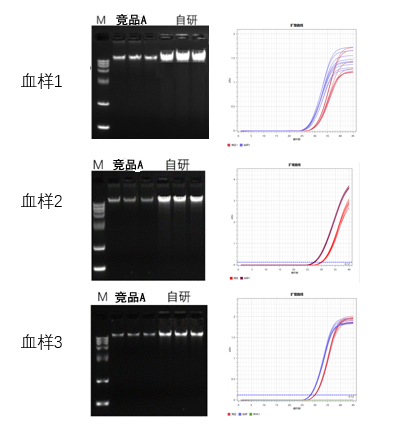
Rocgene Products: Extraction Results of Different Blood Samples
When ArchiPure is combined with Archimed series detection equipment, sample nucleic acid extraction + detection can be completed quickly, efficiently and in one stop, with the fastest detection time of 25 minutes; the detection throughput is flexible, enabling on-demand testing of samples upon arrival; multi-color fluorescence channels are compatible with most detection reagents on the market; the well-to-well uniformity and accuracy can reach ±0.15℃, effectively ensuring the detection rate and accuracy of testing.
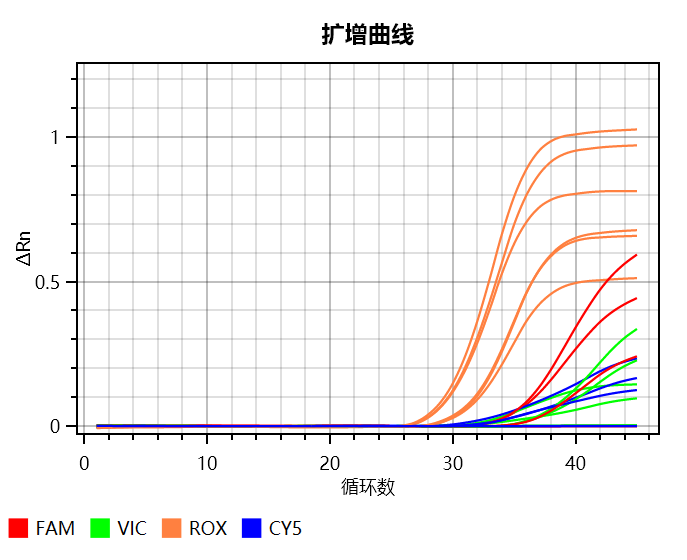
Rocgene Products: Human Genetic Testing Results of Blood Samples
06
16
08
18


 +86-010-86229225
 info@rocgene.com
 CN
CN