

As a precision instrument in scientific research, the stability and reliable after-sales service of a gradient PCR instrument are critically important for researchers. Today, let us explore the after-sales service of gradient PCR instruments and experience the professionalism and care behind it.
The ArchiCycler series is a line of gradient PCR instruments including three models, covering experimental throughput from 32 to 96 wells. The multi-module version with an intelligent user management system supports independent operation of multiple accounts with different protocols, enabling one instrument for multiple applications. All models are equipped with a 10-inch HD color touch screen, an intelligent operating system, and account reservation functions to make your experiments more efficient and convenient.
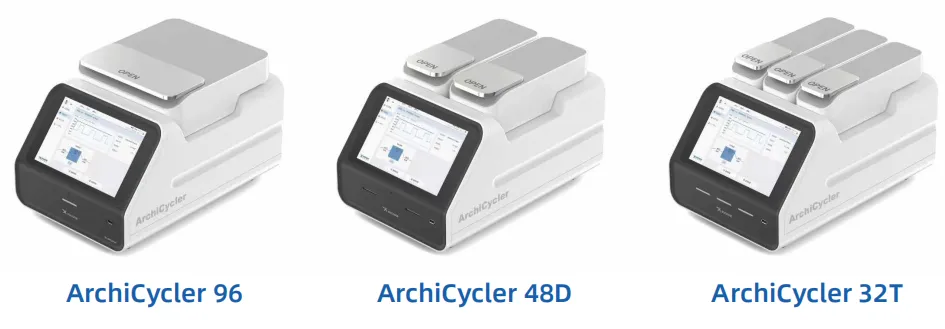
During research, the ArchiCycler gradient PCR instrument, with its unique multi-temperature zone design, provides flexible and precise temperature control, greatly improving experimental efficiency and result accuracy. Nevertheless, even such an excellent instrument may encounter occasional operational issues.
In June 2024, a biotechnology company using the ArchiCycler 32T failed to amplify a 750 bp target fragment after three repeated attempts. The customer urgently needed results for follow‑up experiments and contacted our technical support team. Our engineer immediately traveled to the customer site. Upon arrival, despite fatigue from the trip, the engineer began troubleshooting immediately.
It was found that the customer was using a high‑fidelity DNA polymerase and amplifying the same sample with two primer pairs simultaneously: the 1500 bp fragment amplified successfully, while the 750 bp fragment did not. High‑fidelity enzymes typically require higher denaturation and annealing temperatures, as well as longer denaturation and annealing times. The protocol was re‑optimized, and after three adjustments, satisfactory results were achieved. The root cause was the customer’s unfamiliarity with the characteristics of high‑fidelity enzymes.
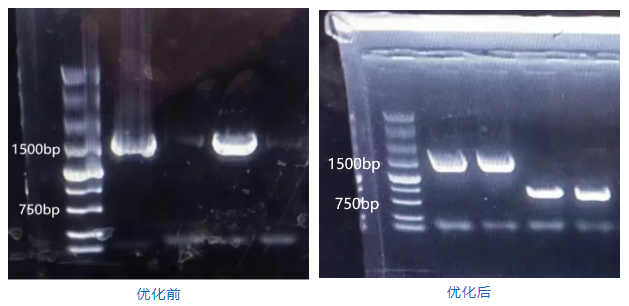
When work reaches a certain stage or milestone, it is necessary to review and analyze carefully, affirm achievements, identify problems, summarize lessons, improve understanding, and clarify future directions.
What is a high-fidelity DNA polymerase?
High‑fidelity polymerase is a type of Taq polymerase distinguished by its proofreading activity. It possesses both 5’‑3’ polymerase activity and 3’‑5’ exonuclease (proofreading) activity, allowing it to correct misincorporated bases during PCR and improve replication accuracy.
When optimizing reaction conditions for high‑fidelity enzymes on the ArchiCycler series, temperature gradients can be set for both denaturation and annealing steps, and ramp rates can be adjusted simultaneously. This allows rapid screening of optimal conditions for high‑fidelity enzymes and primers to achieve ideal experimental results.
ArchiCycler Series Intelligent Gradient PCR Instruments
The ArchiCycler series integrates Rocgene’s proprietary third‑generation Sonic Temperature Control, independent module digital temperature control, and single‑well auxiliary heating technologies. These innovations elevate key PCR performance indicators including ramp rate, temperature uniformity, accuracy, and multi‑zone gradient capability to a new level.
Fast & Stable
Rocgene’s third‑generation Sonic Temperature Control, physical thermal isolation, and single‑well auxiliary heating ensure rapid ramping and precise temperature control;
One Instrument, Multiple Uses
The triple‑module gradient PCR instrument runs three different experiments simultaneously;
High Cost Performance
Gradient and non‑gradient models available to meet diverse experimental needs;
Accurate & Reliable
Excellent temperature uniformity and accuracy guarantee reliable experimental results;
Easy to Use
User‑friendly and full‑featured software with intuitive interface and simple operation;
Superior Quality
International product design and development philosophy ensure outstanding performance and quality for every instrument.
06
16
08
18


 +86-010-86229225
 info@rocgene.com
 CN
CN