

P1
The importance of patents to enterprises
The acquisition of patent rights for enterprises, on the one hand, is a recognition of the hard power of the enterprise, which has a certain publicity effect and honorary value, on the other hand, when the enterprise has a patent for a core technology in the industry, it can inhibit competitors from using the patented technology , the patent can also be licensed to relevant enterprises and patent licensing fees can be charged to increase the income of the enterprise.For example, Qualcomm's annual revenue from patent licensing fees reached $7.947 billion in 2015, and for the maintenance of patents, there is only the cost of patent annual fees, which can be described as "a million profits". As you can see from the table, Qualcomm's annual patent licensing fees are quite considerable.
Today we will not discuss the benefits of patents to enterprises, with the change of social economy and technology, enterprises and individuals have increased their awareness of patent protection, but in the past, when the awareness of patent protection was still weak, patents brought us many unforgettable lessons and thoughts.
P2
Once, the lesson that patents brought to Chinese enterprises
One of the most tragic examples is that China's Wanyan
"Wanyan" made the Chinese people know about VCD and created China's VCD industry.
In 1992, Mr. Jiang Wanmeng, the head of Wanyan Group and the developer of VCD machines, noticed a technology - MPEG at the International Radio and Television Technology Exhibition in the United States, which can compress audio and images that occupy a large amount of storage into a CD, which is cheap, simple and light. Jiang Wanmeng, who has been working in the radio and television system for many years, had an idea and made the world's first VCD, which plays audio and video synchronously, which is of epoch-making significance. However, because the Chinese people's awareness of patent protection was still relatively weak at that time, Mr. Jiang Wanmeng believed that applying for a patent was not very meaningful. As a result, the first batch of 1,000 VCD machines launched by Wanyan were almost all bought by domestic and foreign home appliance companies as prototypes and became the object of dissection.
Subsequently, Sony, Panasonic, Philips and other foreign manufacturing giants have strengthened their research on VCD machines and launched new patented technologies, so that domestic home appliance companies need to pay huge patent fees for the production of VCD. In just seven or eight years, these patent fees have accumulated as much as tens of billions.
In just a few years, Wanyan was drowned in the fierce competition in the same industry, and in the VCD industry, with the increase in entrants, product profits were continuously diluted, and finally the market was eroded by DVDs.
Such an ending can't help but make people sigh, if the patent was applied for at that time, perhaps, the current DVD industry pattern should be rewritten.
However, the cruel truth is that such examples abound.
Wan Yan's "rout" has taught an impressive lesson to domestic enterprises with core technologies, forcing enterprise managers and R&D personnel to realize that while immersing themselves in research and development technology, they must also look up and think about how to protect their technology.
P3
Attitude of modern enterprises towards core products and patents
Rocgene, a steady and steady enterprise rising in the IVD industry, has been adhering to the concept of making first-class products and benchmarking the products of international leading enterprises since its establishment in 16 years. While launching the product, it also applied for patent protection for the core technology at the same time to escort the sales of the product.
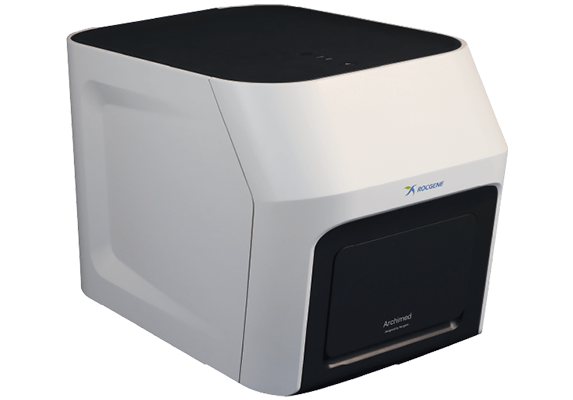
Archimed X6 & Archimed X4
In terms of products, the Archimed series of medical fluorescence quantitative PCR instruments has been launched, and the core technology of the product has been patented and authorized.
With the increasing development of Rocgene, in order to meet the different needs of users and provide users with better products, Rocgene's product categories are gradually increasing, and the patented technologies produced are also growing like mushrooms after a rain.
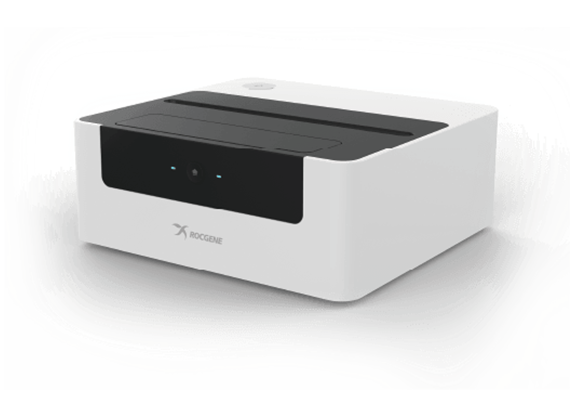
Archimed Mini 16
To meet the needs of on-site rapid real-time detection and low-throughput scientific research and teaching, Rocgene has launched the Archimed Mini 16, an ultra-fast and portable fluorescence quantitative PCR instrument. The system uses innovative liquid circulation refrigeration combined with Peltier temperature control technology, easy-to-operate software, and a lightweight and compact body to quickly and accurately complete quantitative PCR-related applications regardless of site constraints.
As can be seen from the search website, Rocgene currently has a total of 11 authorized patents, 9 patents under review, 16 soft works, and continues to apply for patent protection.
★
From Wan Yan's experience, most Chinese enterprises have gradually attached importance to patent protection, and it is precisely because of this emphasis that Chinese enterprises have given strong resistance.
P4
Later, the patents of Chinese companies fought back
When we faced the patent troubles of foreign companies again,
we were no longer the situation of Wanyan Company in the past
We made adequate preparations.
The most classic example is Yanga Long's floor lock patent encirclement and suppression.
UNILIN is the first company in the world to invent glue-free floor lock technology, which realizes simple, fast, glue-free and environmentally friendly floor laying effect, so it has gained high market acceptance as soon as it was launched, and technology followers continue to appear around the world.
In May 2005, in order to consolidate the market monopoly position of lock flooring, UNILIN and two other flooring companies jointly sued the U.S. International Trade Commission (ITC), accusing 30 wood flooring companies (including 17 Chinese companies) of importing and selling composite wood flooring from around the world, infringing on four patents including "floor locks" in the United States. At the same time, the company applied to initiate a "337 investigation" and requested the ITC to issue a general exclusion order and a cease and desist order.
In January 2007, the ITC made a final ruling, and 16 of the 17 Chinese companies involved in the lawsuit were found to have infringed, of which only Yangaron Company survived the disaster. So, why was Yangaron able to get out of danger in this incident?
Yang Jialong also suffered from patent infringement earlier and paid the corresponding price. But because of this, Yangaron Company is deeply aware of the importance of intellectual property rights and independent research and development, quickly adjusts its research ideas, uses evasive design to eliminate hidden dangers of infringement, and obtains relevant patent rights. This is why Yangaron won the overseas lawsuit and "became famous in one battle", avoiding huge costs.
P5
In the future, it will definitely be a bloody storm of patents
Oncewe experienced the "rout" of domestic patents like Wan Yan, and then we also saw the "light" of domestic patents like Yan Jialong. These experiences have led innovative technology companies like Rocgene to develop technologies while protecting their own technologies effectively.
Where should the future of patent protection go,
is it a patent war
or awin-win situation for patent licensing?
It was once said that art has no borders,
is it really without borders?
art includes not only painting, music, but also industrial art, scientific and technological art, in the current era of rapid information dissemination, the era of gradual shrinking of the global village, I believe that from chips, from lithography machines, from operating systems We should know that national borders will never disappear, and will not disappear in any field.
patents are the
shield of the enterprise
and thesword of the enterprise for an enterprise.
06
16
08
18


 +86-010-86229225
 info@rocgene.com
 CN
CN