

In recent years, the rapid iteration of medical technology has driven the fast development of the in vitro diagnostics (IVD) industry. The market demands higher speed and more compact layout for laboratory equipment. Nowadays, automated assembly lines have been widely used in clinical diagnosis and biomedical research, helping physicians and researchers diagnose diseases and monitor therapeutic effects more accurately.
About Laboratory Automation
Laboratory automation uses robotics to replace manual operations, freeing staff for higher-value work. The introduction of automated integrated systems and automated laboratory solutions allows hospitals and testing institutions to run diagnostic workflows with fewer technicians, reducing human interference, improving accuracy and efficiency, enhancing safety, and delivering consistent, repeatable and flexible results. Especially under limited staffing, it becomes difficult to balance labor and throughput for timely testing. Laboratory automation effectively improves productivity and reduces operational costs.
About Archimed Automation
To meet market demand for automation integration, many Rocgene products have been upgraded for automation compatibility. Different diagnostic instruments cover various automated application scenarios, expanding possibilities beyond traditional use.
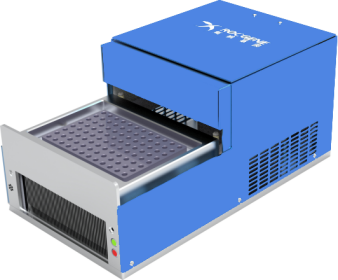
√Archimed M
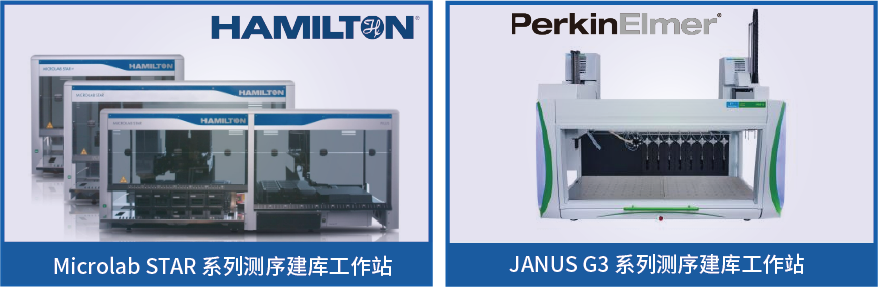
As a versatile PCR instrument, Archimed M features easy installation and connection. It can be used independently as an amplifier and seamlessly integrated with external robotic arms. Its horizontally opening motorized heated lid supports full-range robotic operation. With a standard network interface and compliance with international SiLA standards, it can be easily integrated into various automated liquid handling workstations or platforms, supporting 24/7 high-throughput automated operation. It is widely used in large-scale medical testing, automated NGS library preparation, synthetic biology and other molecular biology applications. Currently, Archimed M has been successfully integrated with workstations from Hamilton, PerkinElmer, Beckman, Burning Rock, Meditech and other manufacturers.
Cooperation Cases
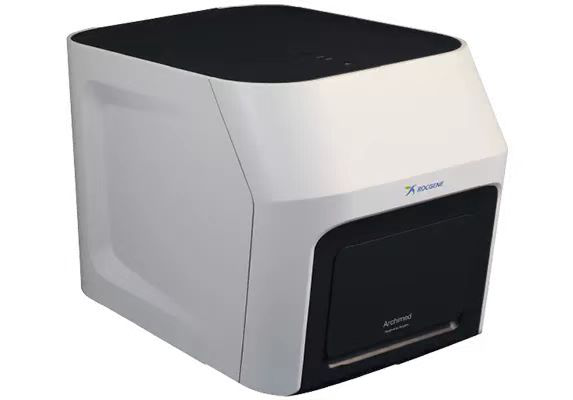
√Archimed X系列
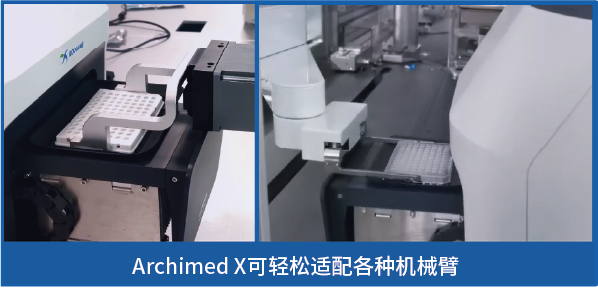
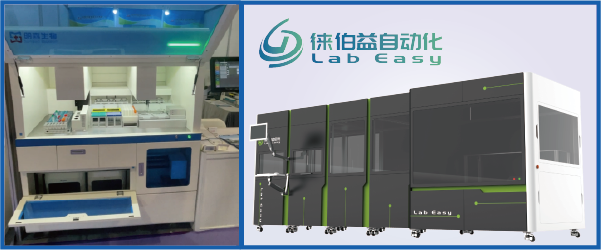
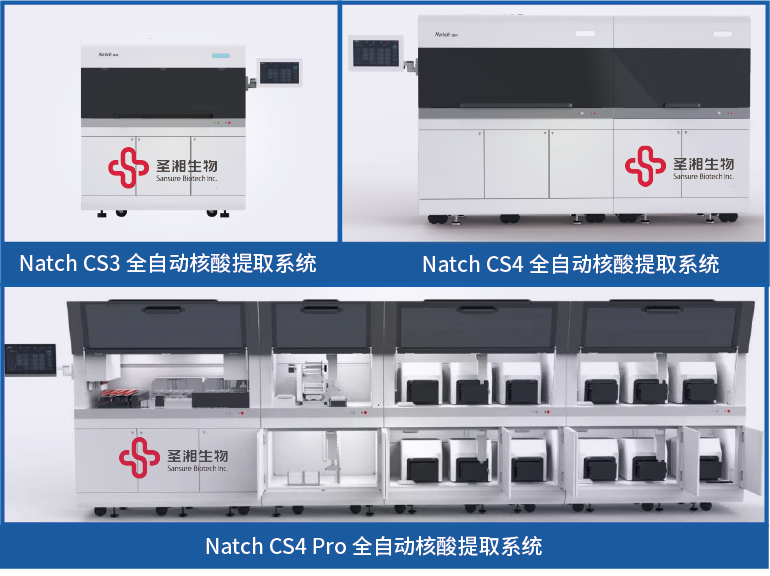
As Rocgene's best-selling product line, the Archimed X Series delivers outstanding performance. Equipped with a novel Fresnel lens optical system, patented time-resolved signal acquisition technology and unique temperature control technology, it provides excellent detection sensitivity, temperature uniformity and accuracy, ensuring precise test results. Multiple models including X4, X6 and 384 meet different throughput requirements. The fully automatic control system can be integrated with various automated workstations and laboratories, and with robotic arms, it easily achieves the full automated testing process: "open lid - close lid - run experiment - export data". The communication protocol also supports "one master controlling multiple devices" operation, enabling automated joint control of multiple instruments with only one main computer, further increasing the upper limit of testing throughput. Currently, it has been integrated with automation platforms from Huixiang, Meijia, Hetang, Sansure, Laiboyi, Minsen Bio, PE, Hamilton and other manufacturers.
Cooperation Cases
√Archimed Mini Pro
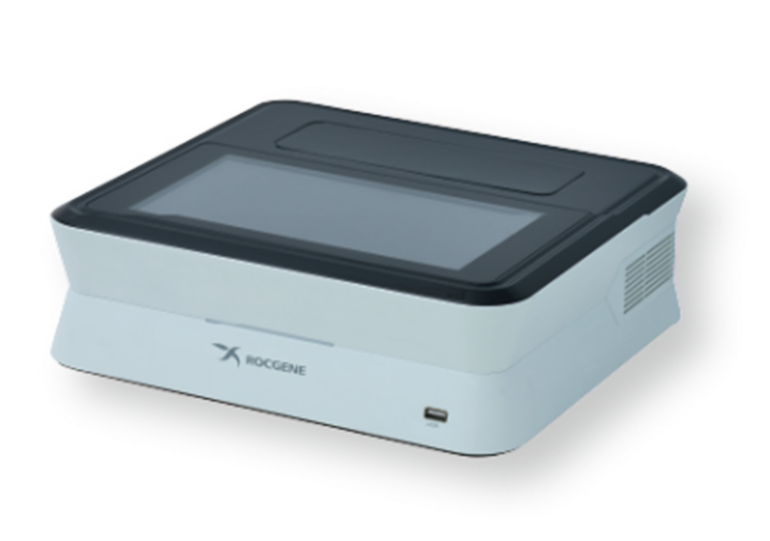
As a brand-new generation rapid portable real-time PCR instrument launched by Rocgene, the new Mini Pro not only inherits the compact portability of the Mini 16, but also upgrades to the third-generation sonic temperature control technology, equipped with an isothermal fluorescence acquisition system and ultra-fast time-resolved linear scanning technology, achieving greater breakthroughs in precision and stability. The 9-inch HD color touch screen makes operation more convenient, and the touch-controlled motorized heated lid compensates for the limitation of the manual button switch of the Mini 16, enabling the Archimed Mini series to easily connect to automation systems. The compact body saves laboratory space significantly, the maximum heating/cooling rate of 11℃/s greatly shortens the experiment cycle, and the insufficient detection throughput can be compensated by the "one master controlling multiple devices" function. Equipped with an automated workstation, it perfectly guarantees the triple requirements of detection accuracy, detection throughput and detection speed.
06
16
08
18


 +86-010-86229225
 info@rocgene.com
 CN
CN