

The trophies for the top three in this series of online reviews are sponsored by Yuanyi Capital. For detailed reasons, please click to view "Yuanyi Capital Sponsors the 'My Favorite Domestic Brand' Online Voting Column".
In this issue, we will vote for domestic PCR instruments, including ordinary PCR instruments, gradient PCR instruments, QPCR instruments, and dPCR instruments for laboratory use.
Main Text:

(Kary B. Mullis)
The first commercial PCR instrument, the "DNA Thermal Cycler" (also known as the Cetus PCR instrument), was launched by Cetus Corporation in 1987. Based on the early work of PCR technology developed by Kary B. Mullis and others, this instrument provided researchers with a practical platform for conducting PCR reactions. The basic principle of a PCR instrument is to separate the two strands of a DNA template by repeatedly heating and cooling in temperature cycles, and guide DNA polymerase to synthesize new DNA strands through primers. It usually includes a heated lid, temperature control system, detection system and other components, and different temperature programs can be set according to experimental needs. These instruments can efficiently amplify target DNA fragments, providing an important tool for molecular biology research. It is said that Fudan University still retains an old PCR instrument made with three water baths, and the first PCR instrument produced in China was developed by the Beijing Institute of New Technology, which was a water bath-type PCR instrument.
In 1996, Applied Biosystems (now acquired by Thermo Fisher Scientific) launched real-time fluorescent quantitative PCR (RTFQ PCR) technology and invented the world's first fluorescent quantitative PCR instrument, marking a leap from qualitative to quantitative detection.
In 2006, Fluidgm developed the first commercial digital PCR instrument. Unlike qPCR, which performs real-time fluorescence measurement for each cycle, digital PCR technology collects fluorescence signals from each reaction unit after amplification is completed. Currently, common digital PCR instruments on the market are mainly divided into two types according to the formation principle of micro-reactions: "chip digital PCR" and "droplet digital PCR".
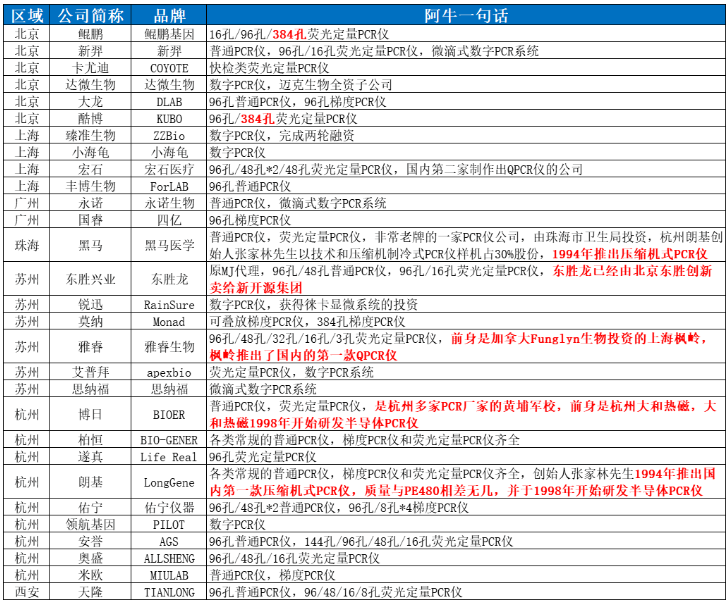
There are numerous brands in this category. On the one hand, molecular experiments are particularly mature with many application scenarios; on the other hand, the sharp increase in market demand has greatly spawned and boosted many brands. This issue has counted 29 common or symbolic brands, and the brands participating in this award are as follows:
Finally, the results of the online public vote are out: the first place is Beijing Rocgene with a total of 3,663 votes; the second place is Dongshenglong with 2,189 votes; the third place is Guangzhou Yongnuo with 948 votes. Congratulations to these three award-winning organizations, all of which have received the corresponding trophies sent by us (as shown in the picture below).
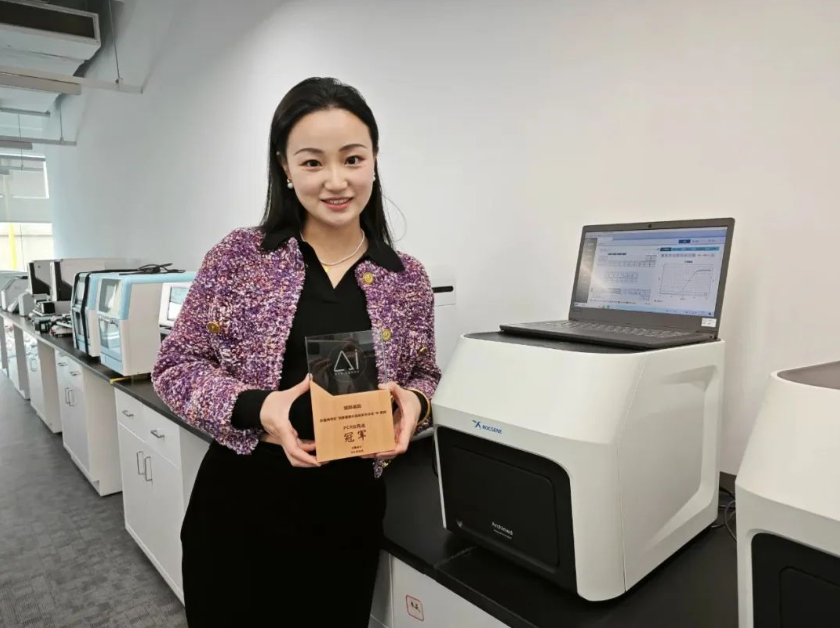
First Place: Rocgene
06
16
08
18


 +86-010-86229225
 info@rocgene.com
 CN
CN