

Tuberculosis (TB) is the world’s second deadliest infectious disease after COVID-19 and the 13th leading cause of death globally. On November 7, the World Health Organization (WHO) released the **Global Tuberculosis Report 2023**, which provides a comprehensive assessment of the TB epidemic and the latest progress in TB prevention, diagnosis, and treatment at global, regional, and national levels. The report also includes a detailed analysis of China’s health system TB data.
Global Tuberculosis Situation
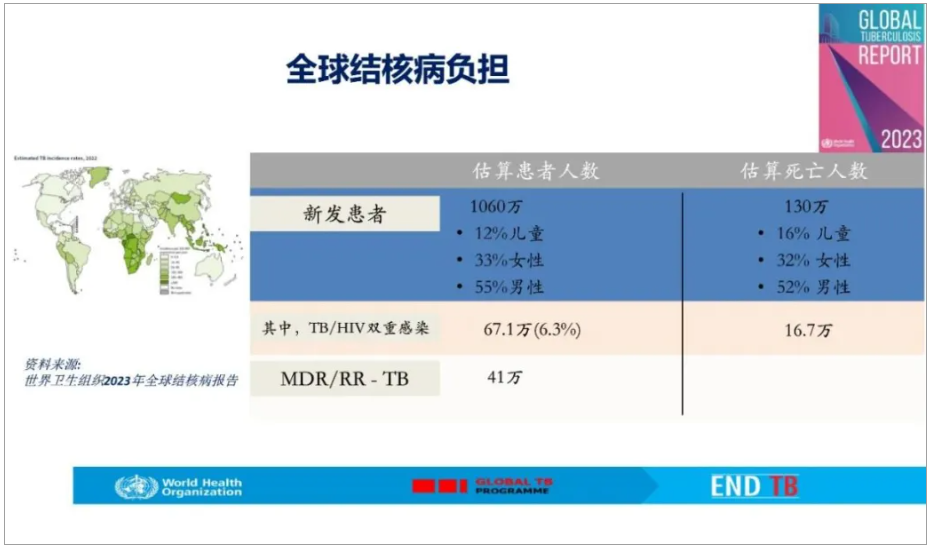
Between 2020 and 2022, the global TB incidence rate increased by 3.9%, breaking the annual decline of about 2% seen over the previous 20 years. The global TB epidemic remains severe.
Tuberculosis Situation in China
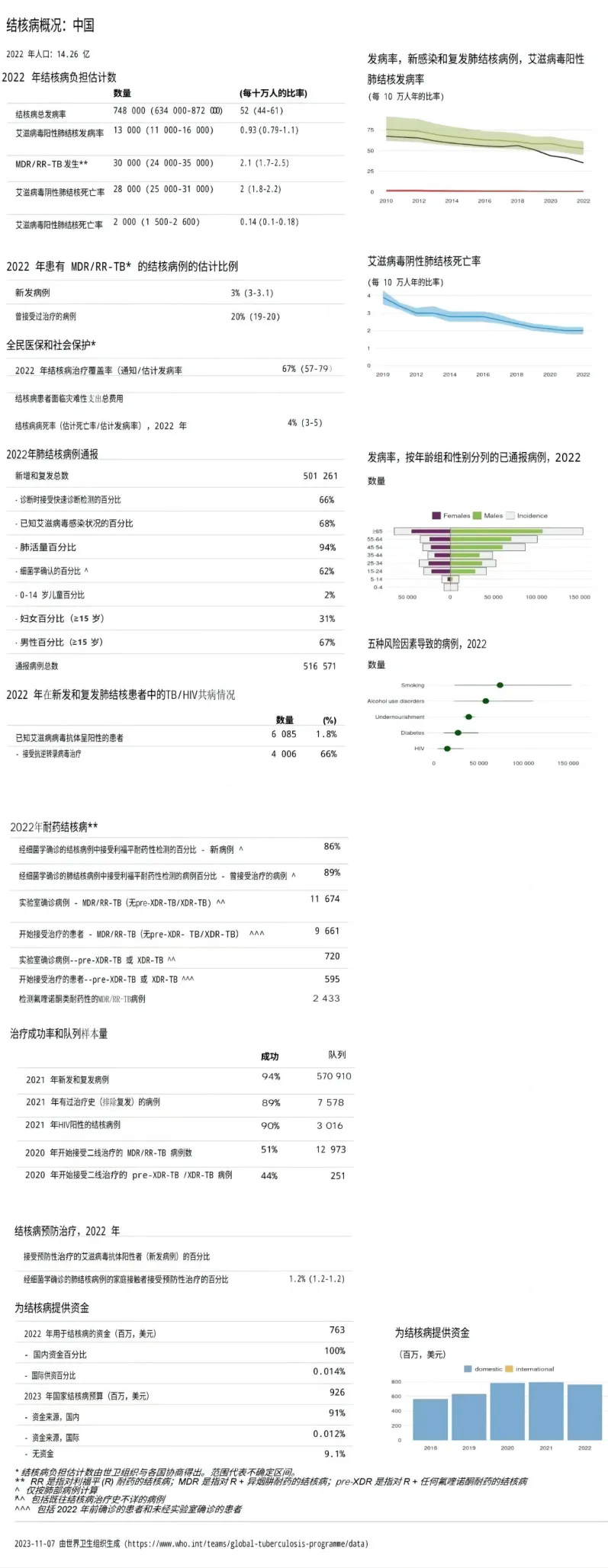
In 2022, China’s estimated number of new TB cases was 748,000 (compared with 780,000 in 2021), with an estimated TB incidence rate of 52 per 100,000 population (55 per 100,000 in 2021).
Among the 30 high TB-burden countries, China ranks 3rd in estimated TB incidence, accounting for 7.1% of the global total, lower than Indonesia (10%) and India (27%).
The estimated number of TB deaths in China was 30,000, with a TB mortality rate of 2.0 per 100,000 population. The estimated number of patients with multidrug-resistant/rifampicin-resistant TB (MDR/RR-TB) was 30,000.
Impact of the COVID-19 Pandemic
on Global Tuberculosis

Affected by the COVID-19 pandemic, the number of newly reported TB cases globally decreased in 2020 and 2021, meaning some TB patients were left undiagnosed and untreated, leading to increased TB deaths and community transmission. In 2022, the global number of registered TB patients recovered and exceeded pre-pandemic levels, reversing the upward trend in TB deaths estimated for 2019–2021.
The global number of TB deaths in 2022 (1.3 million) was lower than the 1.4 million recorded in 2020 and 2021, and close to the 2019 level.
The impact of the COVID-19 pandemic on TB mortality was far greater than that of HIV/AIDS. An estimated 500,000 excess TB deaths occurred between 2020 and 2022 due to the pandemic.
Impact of HIV Status
on Global Tuberculosis
Trends in global TB deaths are influenced by HIV status. In 2022, an estimated 1.13 million HIV-negative TB patients died worldwide, showing a downward trend after increases in 2020 and 2021, and approaching the 2019 death toll. HIV-positive TB deaths have been declining for years, with an estimated 167,000 deaths in 2022.
Progress Towards Milestone Targets
and the UN Political Declaration Goals
TB Detection and Treatment
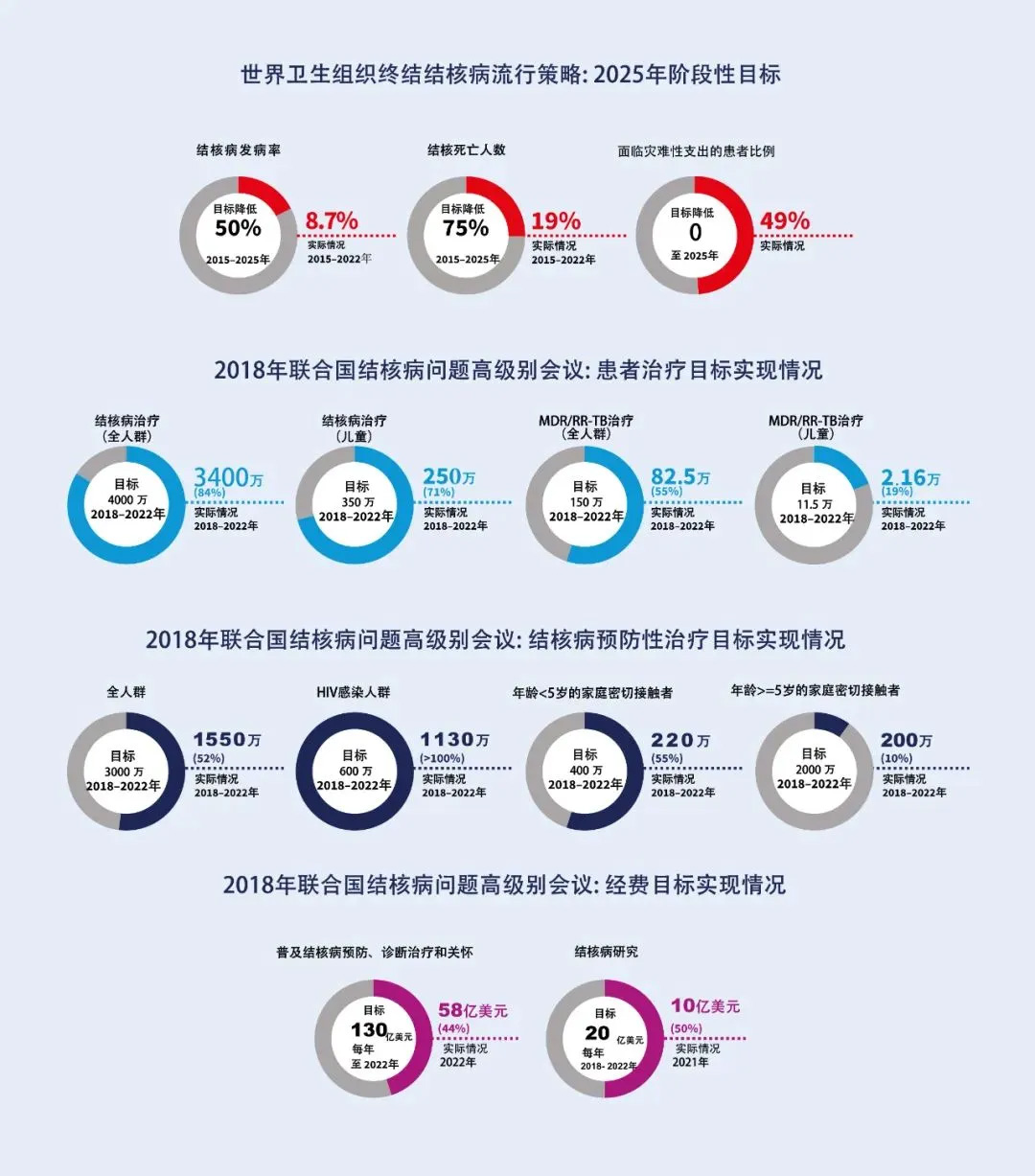
7.5 million TB patients were diagnosed and registered in 2022 — the highest number since WHO began global TB surveillance in 1995, up from 7.1 million in 2019, 5.8 million in 2020, and 6.4 million in 2021.
From 2000 to 2022, TB treatment saved a total of 75 million lives.
A large gap still exists between detected and estimated TB cases. Around 3.1 million cases were undiagnosed or unregistered in 2022, down from 4 million in both 2020 and 2021, and returning to the 2019 level.
Ongoing Challenges
Multidrug-resistant TB remains a public health crisis. An estimated 410,000 people developed MDR-TB or RR-TB in 2022, but only about two-fifths received treatment.
Some progress has been made in developing new TB diagnostics, drugs, and vaccines, but this is constrained by overall investment levels in these fields.
The Global Tuberculosis Report 2023 shows that global efforts against TB have saved more than 75 million lives since 2000. However, TB remains the world’s second deadliest infectious disease, and much more work is needed.
Application of New Diagnostics, Drugs and Regimens
WHO-recommended rapid molecular diagnostics enable early and accurate diagnosis and are among the key testing tools of the End TB Strategy.
Uptake of rapid diagnostics remains suboptimal. Of the 7.5 million newly diagnosed TB patients in 2022, only 47% received WHO-recommended rapid molecular testing, slightly up from 38% in 2021 and 33% in 2020.
By the end of 2022, 40 countries had adopted the 6-month BpaLM/BpaL regimen for MDR/RR-TB or pre-XDR-TB patients.
As in 2021, 92 countries used the 9-month all-oral regimen for MDR/RR-TB patients.
The number of people receiving short-course (1–3 months) rifamycin-based preventive treatment increased. In 2022, 600,000 people across 74 countries received short-course regimens, compared with 185,350 people across 52 countries in 2021.
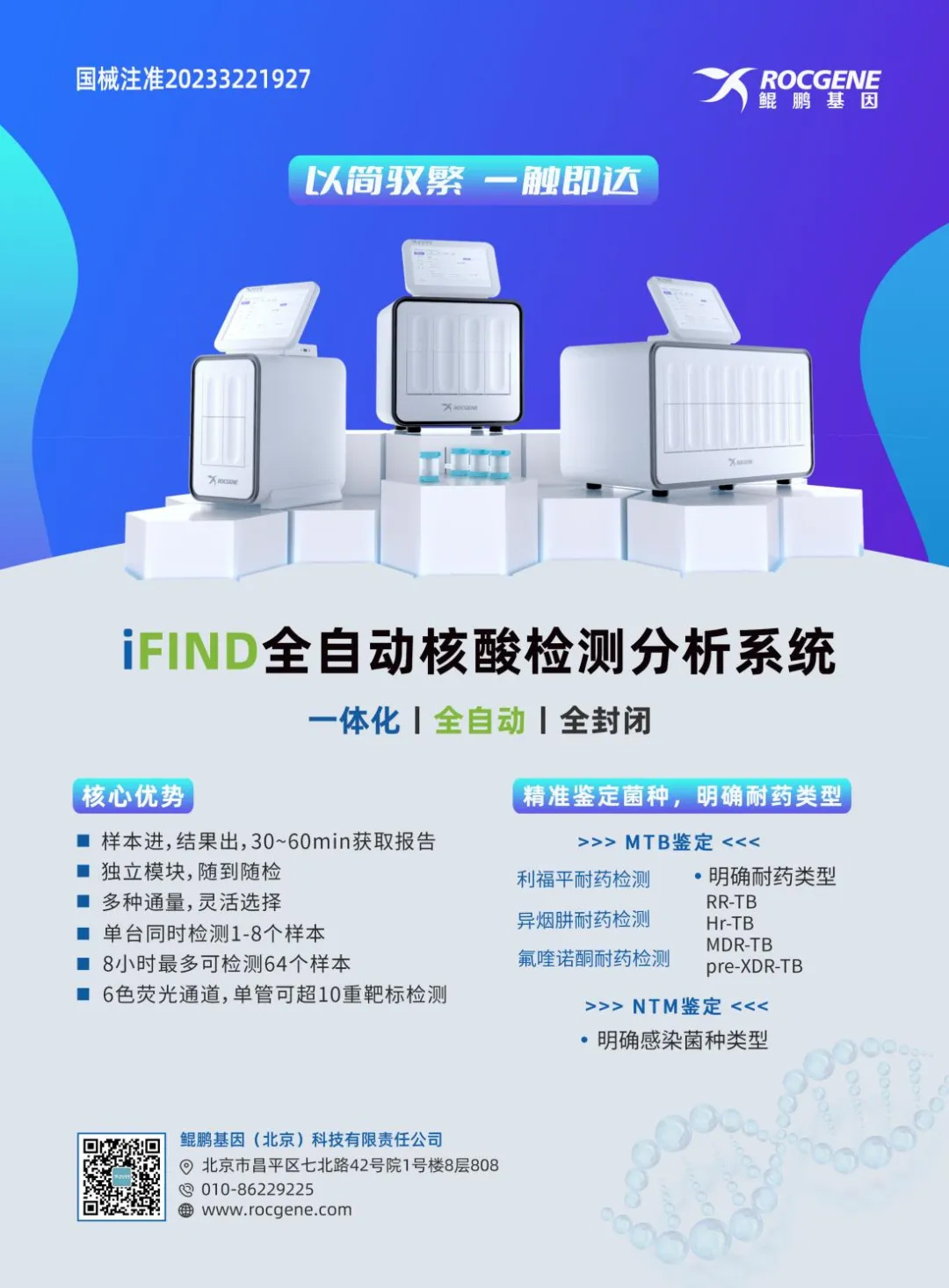
Rocgene
iFIND Fully Automatic Nucleic Acid System
TB Rapid Molecular Diagnostic Solution
06
16
08
18


 +86-010-86229225
 info@rocgene.com
 CN
CN